Excursions
The Sahara doesn't have a single "best" season — it has trade-offs. Here's what each part of the year actually feels like on the ground, so you can pick the timing that matches what you want from the trip.
For most travelers, October-November and March-April hit the sweet spot: warm days, cool but bearable nights, and clear skies for stargazing. Summer (June-August) is intensely hot, while winter (December-February) brings cold desert nights that surprise a lot of visitors.
Daytime temperatures sit comfortably between 20-28°C, with nights cooling to a pleasant range rather than a harsh chill. This is one of the most reliable windows for camel treks and overnight camps, with relatively low chances of sandstorms compared to early autumn.
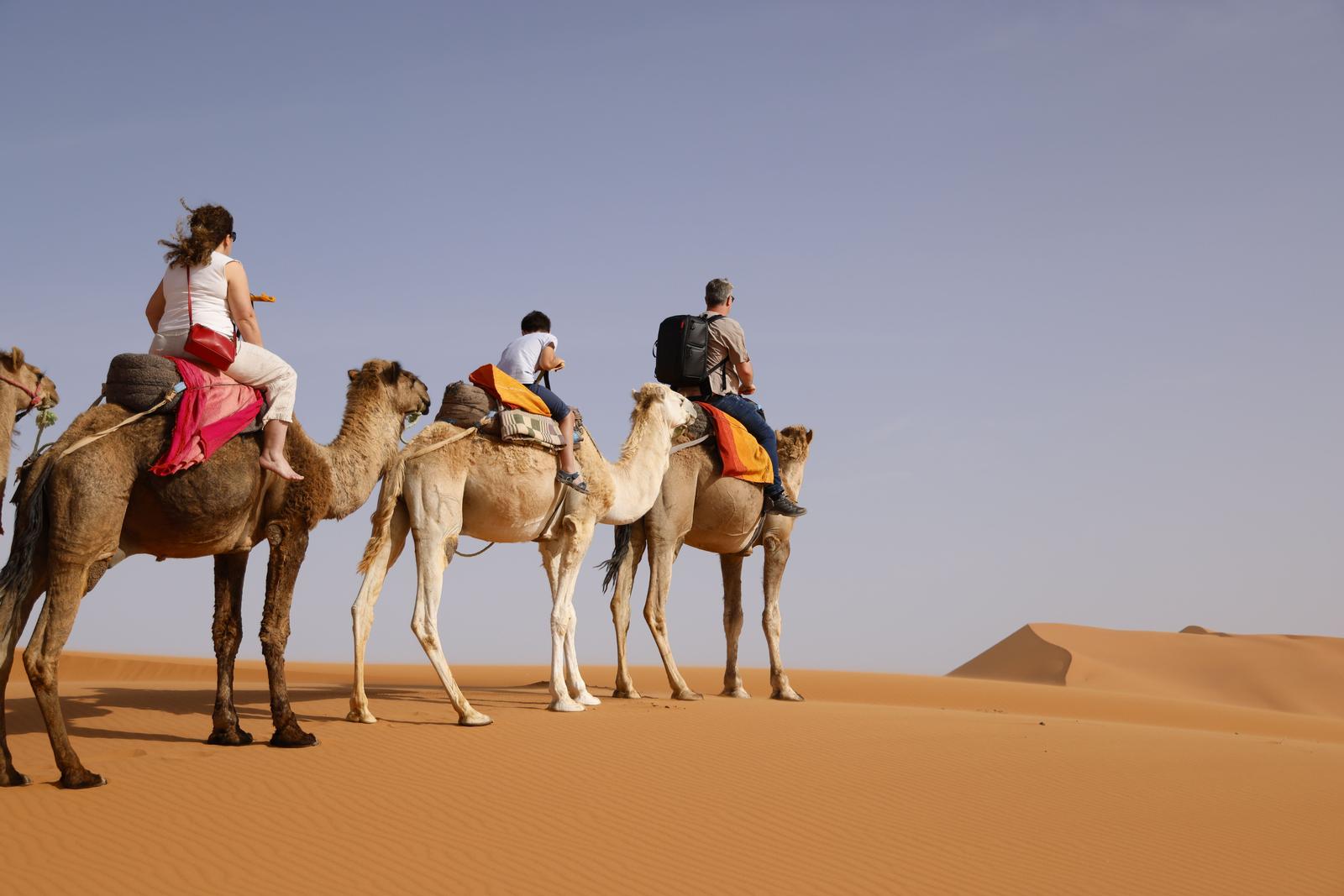
This is peak heat — daytime temperatures regularly exceed 40°C in the Sahara, making midday activity genuinely uncomfortable. That said, sunrise and sunset camel rides remain manageable, and summer nights are mild rather than cold, which some travelers actually prefer for sleeping in desert camps.
If traveling in July or August, plan desert activities for early morning or evening only, stay hydrated constantly, and choose accommodations with reliable shade or air conditioning for the midday hours.
Often considered the best overall window — the brutal summer heat has passed, but winter's cold nights haven't arrived yet. October and November in particular offer warm, clear days and comfortably cool (not cold) evenings, ideal for stargazing without needing heavy layers.
Daytime temperatures are pleasant, often 18-22°C, and many travelers are surprised by how comfortable the desert feels at noon. The catch is nighttime: temperatures can drop close to freezing, especially in December and January. Overnight camps require warm layers and good blankets — most camps provide these, but it's worth confirming in advance.
| Season | Days | Nights | Best For |
|---|---|---|---|
| Spring (Mar-May) | Warm, 20-28°C | Mild | Reliable all-rounder |
| Summer (Jun-Aug) | Hot, 35-45°C | Mild-warm | Avoiding cold nights |
| Autumn (Sep-Nov) | Warm, 22-30°C | Cool | Best overall balance |
| Winter (Dec-Feb) | Mild, 18-22°C | Cold | Clear skies, fewer crowds |
Stargazing is excellent year-round in the Sahara due to minimal light pollution, but autumn and winter skies tend to be the clearest, with less atmospheric haze than summer months.
We'll help you pick the right desert and timing based on your travel dates.
There's no wrong time to see the Sahara, but if you have flexibility, aim for October-November or March-April. You'll get warm, clear days and nights cool enough to enjoy a fire and the stars without needing to bundle up against genuine cold.
Message us on WhatsApp — confirmed in under 5 minutes.